

Estimated reading time: 12 minutes
This guide helps you plan the season, license, regulations, and compact personal gear for a Middle Fork fly-fishing trip. For detailed presentations, fly selection, drift troubleshooting, and fish care, use the separate Middle Fork fly-fishing tactics guide.
The Middle Fork of the Salmon River is one of North America’s premier wilderness trout fisheries: 100 roadless miles, crystal-clear water, and healthy populations of native trout in the heart of Idaho’s Frank Church–River of No Return Wilderness.
Middle Fork Fly Fishing at a Glance
Where:
- Middle Fork of the Salmon River, central Idaho, a federally designated Wild & Scenic River flowing through the Frank Church–River of No Return Wilderness.
Target species (trout & gamefish): Using the Idaho Fish & Game’s Middle Fork Salmon River Fishing Planner as a reference, primary game fish include:
- Westslope cutthroat trout
- Rainbow trout (and rainbow–cutthroat hybrids)
- Mountain whitefish
- Brook trout
- Bull trout (protected; catch-and-release only)
Management highlights:
- Trout in the Middle Fork and its main tributaries are catch-and-release only.
- Barbless hooks required, no bait allowed.
- Fishing is open all year under Idaho regulations, with special rules for this reach.
On an MFRT trip, you can expect:
- All rafting gear, camp set-up/breakdown, tents, sleeping bags, pads, life jackets, and dry bags included.
- Guided oar rafts (guides do most of the rowing), with the option to fish from the raft or from shore when conditions allow.
- Gourmet meals and a full camp experience taken care of for you.
- Dedicated September fishing departures whose current group and boat format should be confirmed on MFRT’s rates and dates page.
Why the Middle Fork is a Special Trout Fishery
Key reasons fly anglers love this river:
- Wild, mostly self-sustaining fish populations
- Strong native cutthroat trout population
- Highly protected, catch-and-release management
- Pristine, roadless setting
For guests, that translates to clear water, eager wild trout, and a setting that feels almost unchanged by time—while MFRT handles logistics, safety and comfort in the background.
Seasons: When to Fly Fish the Middle Fork
Idaho Fish & Game lists Middle Fork Salmon River waters as open to fishing year-round, with special tackle and harvest rules.
In practice, access and the rafting permit season mean most anglers fish the Middle Fork June through September. MFRT structures trips into clear seasonal windows: high water, main season, late season, and a September fishing focus.
Early June – Mid-June: High Water Season
MFRT’s High Water Adventure runs in early June to mid-June.
What to expect:
- Peak snowmelt flows: Faster current, bigger waves, fewer exposed gravel bars.
- Colder water and air temps: You’ll want extra layers and good rain gear. The River 101 packing lists emphasize warm synthetic or wool layers, a quality rain suit, and sturdy river footwear.
- Fishing style:
For hardcore anglers, high water is exciting but less “technical sight-fishing” and more opportunistic shots between big whitewater sections.
Late June – Mid-August: Main Summer Season
MFRT’s Main Season trips run from late June through mid-August.
Conditions:
- Moderate flows and warmer water mean more accessible bank structure, side channels, and eddies.
- Long daylight hours and pleasant air temps create classic “float-and-cast” days.
Typical fishing:
- Dry-fly focus: This is prime time for stoneflies, caddis, mayflies, and then terrestrial patterns as summer progresses (hoppers, ants, beetles).
- From the raft: Guides row you into soft edges, foam lines, and pocket water where trout sit looking up.
- From shore: Lunch stops and camp provide extra chances to work riffles, tailouts, and seams on foot.
Even if you’re not an experienced angler, this window is ideal: stable conditions, forgiving dry-fly fishing, and comfortable weather.
Mid-August – Early September: Late Season
MFRT’s Late Season trips run mid-August into early September.
Expect:
- Lower, clearer water: More visible fish and defined holding lies.
- Cooler mornings, crisp evenings: Layers are key, but afternoons remain comfortably warm.
- Small dries & terrestrials: Smaller caddis, mayflies, and terrestrials shine as flows drop.
Fishing can be very good in late season: trout are opportunistic, the river is quieter, and camps feel even more intimate.
September: MFRT Fishing Adventure
MFRT’s dedicated Fishing Adventure trips in September are built around additional fishing time. Confirm the current guest capacity and boat format before booking:
- Smaller fishing-focused groups and guide-powered boats create more casting opportunity than a general departure.
- These trips emphasize Westslope cutthroat and rainbow trout on a fully catch-and-release basis.
- Bring the personal fishing kit and license described in current trip materials. Waders are generally unnecessary for the guided river format.
September trips are ideal if:
- Your primary goal is fishing, not whitewater thrills.
- You like cooler nights, fewer boats on the river, and deliberate, methodical fishing.
Fall, Winter & Shoulder Seasons for Private Anglers
Regulations allow fishing year-round, but winter access is extremely limited and conditions are harsh.
For all practical purposes:
- Commercial trips (like MFRT’s) operate June–September when flows, weather, and logistics align with a safe, enjoyable wilderness experience.
- Outside these windows, self-supported anglers would be dealing with snow-blocked roads, dangerous flows, and very short days.
Regulations: What You *Must* Know Before You Fish
Always check current regulations before your trip; emergency changes can occur within a multi-year cycle. The Idaho Fish and Game fishing-rules page links the operative 2025–2027 booklet and current updates. This summary was verified July 25, 2026.
1. Licenses & Youth Rules
Who needs a fishing license?
Children under 14: Idaho residents under 14 may fish without a license. A nonresident child under 14 may fish without a license when accompanied by an adult who holds a valid Idaho fishing license, but the child’s fish count toward the licensed adult’s limits where harvest is legal. A nonresident child who wants a separate limit needs the appropriate junior license. Verify the current wording with IDFG before the trip.
The Middle Fork’s trout rules are catch-and-release, but the resident/nonresident distinction still matters for lawful participation and for any fishing elsewhere in Idaho.
2. Middle Fork Special Rules (Trout, Gear & Bait)
Idaho Fish & Game’s Fishing Planner lists specific rules for the “Salmon River, Middle Fork and tributaries (includes Bear Valley, Big, Camas, Elk, Loon, Marsh, Sulphur creeks, and tributaries)”: Idaho Fish and Game
Key regulations (2025–2027 cycle):
- Trout – catch-and-release only.
- No bait allowed. Artificial flies and lures only.
- Barbless hooks required. Single barbless hooks are standard practice per USFS guidance.
- Bass: No bag, size, or possession limits on bass in the Middle Fork segment (though you must still follow gear restrictions—no bait—when targeting them).
- Bull trout: Listed separately in regional rules as catch-and-release. If you catch one while trout fishing, release it immediately and handle it carefully.
3. Salmon & Steelhead
Ocean-run salmon and steelhead are heavily regulated, with seasons and bag limits set in separate brochures and often not open on the Middle Fork itself.
- It is illegal to fish for salmon or steelhead unless a specific open season is declared for that waterbody.
- If you hook a Chinook salmon or steelhead incidentally while trout fishing on the Middle Fork, treat it as a protected fish and release it immediately.
For detailed salmon and steelhead rules, Idaho Fish & Game provides separate PDFs linked from: Idaho Fish and Game
4. Wilderness & Salmon Redd Protection
The US Forest Service highlights additional responsibilities for anglers in this wilderness corridor: U.S. Forest Service
- Chinook salmon redds (spawning nests) are present in late summer and fall in both tributaries and the mainstem.
- Boaters and anglers should avoid wading, anchoring, or dragging boats over redds, which appear as lighter-colored, cleaned patches of gravel.
- The Forest Service publishes annual redd maps to help river users avoid these sensitive areas.
As guides, MFRT crews are familiar with redd locations and will position boats and stops to help minimize disturbance.
5. Aquatic Invasive Species (AIS) Stickers
Idaho requires most watercraft—including rafts and kayaks—to display an Invasive Species Fund (IISF) sticker, unless they are inflatable, non-motorized, and under 10 feet in length.
- AIS sticker overview: Idaho Fish and Game
- Program FAQs: invasivespecies.idaho.gov
On an MFRT trip, guests do not need to worry about AIS stickers—this is handled as part of the outfitter’s compliance and permitting responsibilities. For private boaters, however, AIS stickers and mandatory boat inspections are essential.
Gear: What You Actually Need for Middle Fork Fly Fishing
One of the benefits of fishing with MFRT is how little heavy gear you need to bring. The outfitter provides all rafting and camping equipment:
- 4-person tents
- Freshly laundered ~35°F sleeping bags
- Deluxe sleeping pads with fitted sheets
- Life jackets (PFDs)
- Large (≈85L) expedition dry bag for your duffel
- A smaller (≈15L) day dry bag
- All cooking and eating gear
- First-aid supplies
- Comfortable camp chairs
You focus on personal clothing and your fishing kit.
Recommended Fly Rods & Reels
For most Middle Fork trout fishing:
- 4- or 5-weight, 9-foot rod Ideal all-around choice for dry flies, light nymph rigs, and moderate wind.
- Optional 6-weight, 9-foot rod Helpful if you like throwing larger streamers or expect strong afternoon winds.
Reel considerations:
- A good trout reel with a smooth drag; nothing extreme, but reliable.
- Spool with a floating line; most Middle Fork trout are taken on dries or dry-dropper rigs.
Leaders, Tippet & Terminal Tackle
Given the clarity of the Middle Fork, standard Western trout sizes work very well:
- Tapered leaders: 9 ft in 3X–5X.
- Tippet: 3X, 4X, 5X to match your patterns and wind.
- Hook style: Single barbless hooks only (pinch barbs before the trip).
Don’t forget:
- Floating line treatment/paste
- Nontoxic split shot (if you like nymphing within the artificial-only rules)
- Small, legal indicators (foam or yarn) if you fish dry-dropper or indicator rigs
Flies That Consistently Produce
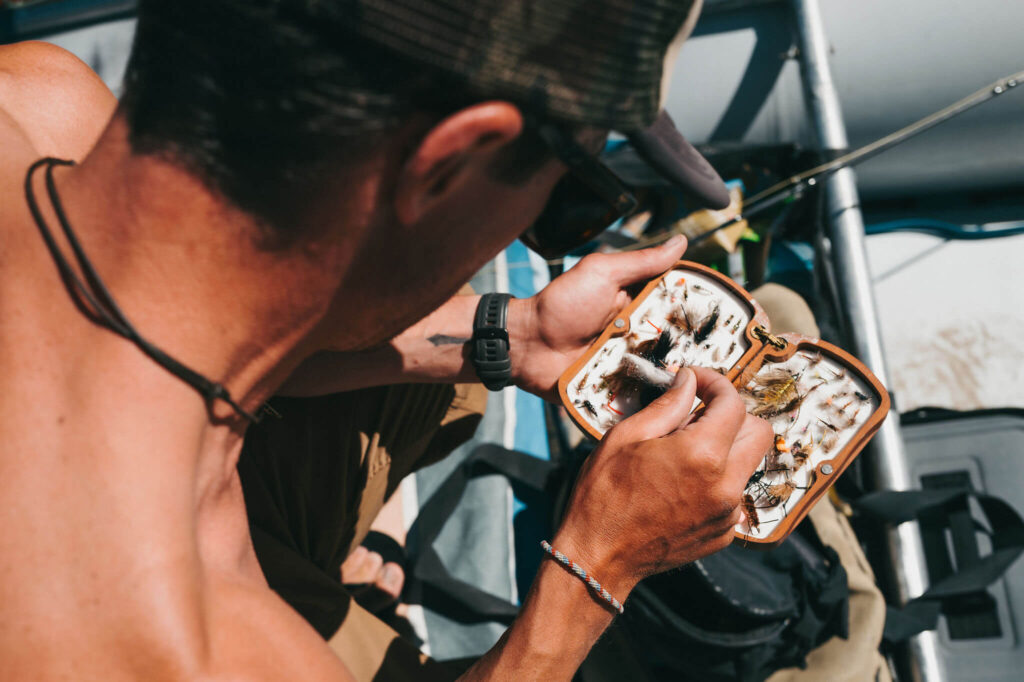
Keep the box compact and organized by function. Hatch timing and daily water conditions vary; the tactics guide owns the detailed fly and presentation recommendations.
Hatch timing varies year to year, but a well-rounded Middle Fork box generally includes:
Dries
- Large stonefly patterns (Salmonfly & golden stone imitations)
- Caddis dries in tan/olive
- Mayfly patterns in pale and darker tones (e.g., PMD/BWO style sizes 14–18)
- Terrestrials:
Nymphs
- General attractors: Hare’s Ear, Pheasant Tail, Prince Nymph
- Stonefly nymphs in darker colors
Streamers
- Small to medium streamers in natural colors (olive, tan, black) for deeper pockets, especially in higher or off-color water.
Everything must be fished on single, barbless hooks and with no added bait or scent.
Wading Gear & Clothing
Waders are generally not necessary for Middle Fork trips, including their fishing-focused itineraries.
Instead, think “wet-wading with layers”:
- Footwear
- Layers
- Weather protection
- Sun & comfort essentials
Personal Fishing Kit Checklist
Alongside your fly fishing gear, consider packing:
- Rods & reels (with backup if you have it)
- Flies in waterproof boxes
- Nippers, hemostats/forceps
- Small fly patch or working box for the boat
- Spare leaders & tippet
- Compact waterproof pack or waist belt for shore fishing
- Travel rod case (guides will help stow it safely on the boats)
If you don’t want to travel with a full setup, The Stanley Fly Shop in Stanley offers gear rentals. (See “Fishing on the Salmon River” section at MFRT.)
What MFRT Provides vs. What You Bring
Our River 101 and Fishing Adventure pages outline a clear division of responsibilities:
MFRT Provides
- All rafting equipment (oar rafts, safety gear, river kitchen)
- Tents, sleeping bags, pads, camp chairs
- Private river-side toilet facilities and safe drinking water
- Gourmet breakfasts, lunches, and dinners
- Large and small dry bags for your gear
- Camp set-up and take-down each day—you arrive to a ready-made camp
You Bring
- Personal clothing and toiletries (per the River 101 gear list)
- Fly fishing tackle (rod, reel, flies, terminal gear)
- Valid Idaho fishing license (and salmon/steelhead permits only if needed for other parts of your trip)
- Optional extras: camera, binoculars, journal, and a small pillow
Because MFRT trips are fully outfitted, anglers can travel relatively light—especially important if you’re flying into Idaho.
FAQs: Middle Fork Fly Fishing with MFRT
No. Current Idaho Fish and Game Middle Fork special rules require trout to be released.
Not at all. MFRT guides can help beginners, and advanced anglers benefit from their local knowledge.
Yes—but you must still follow Middle Fork rules: artificial lures only, no bait, and barbless hooks. Many guests enjoy small barbless spoons or spinners, but fly gear offers the most flexibility and is easiest to adapt to the artificial-only requirements.
For June–September MFRT trips, waders are generally not required.Some anglers do bring light, breathable hip waders or neoprene socks for cold-water comfort, but they’re optional rather than essential.
Age 14+ must have their own Idaho fishing license. Under 14 rules vary by residency; the main concern here is licensing because trout are catch-and-release.