


Estimated reading time: 9 minutes
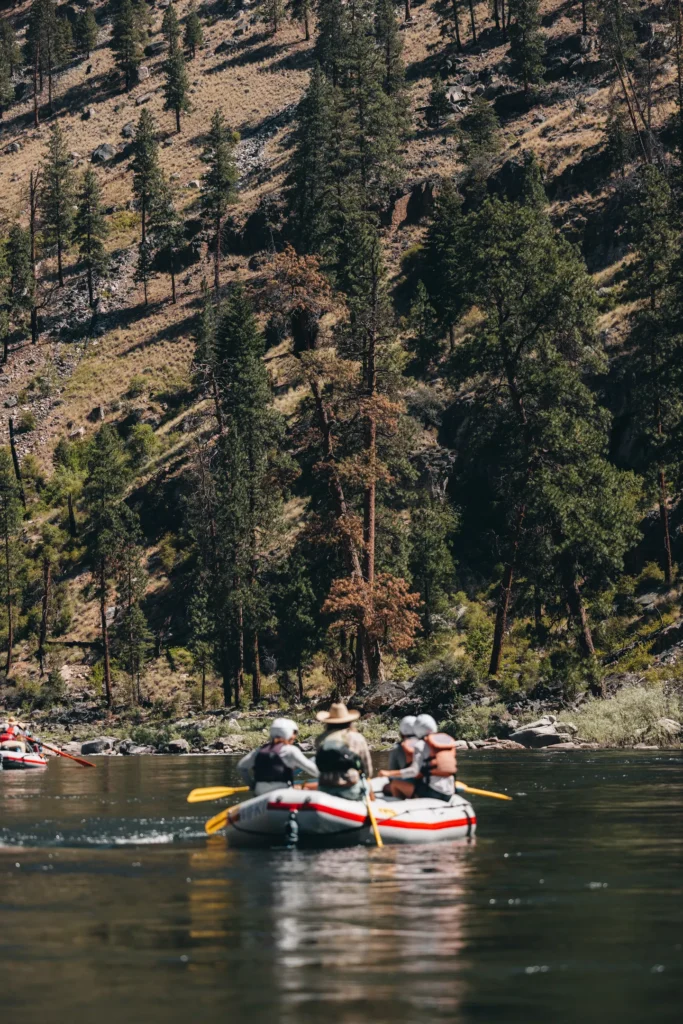
Wildlife is part of the Middle Fork experience, but it does not follow a trip schedule. A bighorn sheep may appear on a sunlit slope, an eagle may cross above the canyon, or an otter may surface and disappear before anyone reaches for a camera. You may also travel for hours without a close sighting.
The best expectation is not a checklist of guaranteed animals. It is a week of moving quietly through a remote river corridor where wildlife is present, alert, and free to keep its distance.
The Short Answer
The 104-mile Middle Fork corridor passes from alpine forest into drier, rock-walled canyon, creating habitat for many kinds of wildlife. The federal Middle Fork Wild and Scenic River profile lists bighorn sheep, elk, mule deer, black bear, river otter, beaver, mountain lion, rattlesnake, and more than 75 bird species among the animals found along the river.
That list describes habitat, not the odds for a particular departure. Bighorn sheep, deer, eagles, waterfowl, and smaller riverside animals are sensible species to watch for. Bears, mountain lions, wolves, wolverines, and mountain goats live in or use the broader corridor but are much harder to spot.
When an animal does appear:
- Stay where your guide asks you to stay.
- Give the animal room and an open way to leave.
- Never feed, call, chase, touch, or surround wildlife.
- Use binoculars or a zoom instead of moving closer.
- Tell a guide promptly about a bear, mountain lion, moose, or rattlesnake near camp or a trail.
What You May See
| Wildlife | Where and what to watch for |
|---|---|
| Bighorn sheep | Scan open, rocky slopes and cliff bands. This is a signature Middle Fork possibility, especially when someone spots movement high above the river. |
| Mule deer and elk | Check river benches, brushy edges, open slopes, and side drainages. Animals may be partly hidden by terrain or vegetation. |
| Eagles and other birds | Watch ridges, thermals, treetops, cliffs, and the water’s edge. Species and activity vary by season. |
| River otter and beaver | Look along quiet water, banks, side channels, and shoreline vegetation for a quick surface, wake, tracks, or cut branches. |
| Black bear | Bears use forest edges, brush, and side drainages. A sighting is uncommon and should be treated as a safety situation as well as a wildlife moment. |
| Mountain lion, wolf, wolverine, and bobcat | These secretive animals use remote canyon and forest habitat but are rarely seen from a rafting trip. |
| Rattlesnake | Check warm, rocky ground, trails, and camp edges. Snakes rely on camouflage; pause and give one space if it is seen or heard. |
Bighorn sheep are a Middle Fork highlight
Rocky Mountain bighorn sheep are especially well suited to the canyon’s steep, broken terrain. Idaho Fish and Game’s 2024 Middle Fork survey counted 1,123 animals across six hunt areas. The agency also cautioned that the sheep-specific survey used a different method from earlier work, so the result should not be treated as a simple population trend.
For guests, the practical lesson is simpler: scan open slopes and cliff bands, and let the person who first sees an animal help everyone find the same landmark. Sheep can blend into rock surprisingly well. A guide may say “below the lone pine” or “on the light-colored ledge” rather than point directly at an animal.
If sheep are near the water or a trail, stay back and leave their route open. Do not ask a boat to crowd the bank for a closer photograph.
Birds reward steady attention
The corridor’s federal profile identifies golden eagles, chukar, grouse, harlequin ducks, other waterfowl, and migratory songbirds. Bald eagles also use the drainage. Species and activity change with habitat, weather, and season, so a bird list from one trip will not predict the next.
Look up as well as toward shore. Raptors may circle above a ridge, while waterfowl stay low near current and rocks. Calls, silhouettes, feathers, and tracks can be as much a part of the experience as a long, clear view.
Signs still count
Wild animals often notice a group before the group notices them. Tracks in sand, beaver-cut branches, scat, distant calls, or movement in brush can reveal what has passed through without producing a photograph.
Treat signs as clues, not invitations to follow. Do not leave the trail, enter brush, handle remains, or approach a possible feeding site. If something seems fresh or unusual, point it out to a guide.
How to Watch Without Changing the Animal’s Behavior
A respectful sighting lets the animal continue what it was already doing. There is no single distance that fits every species, terrain, or encounter, so watch the animal as well as the view.
You are too close if an animal stops feeding, stares repeatedly, bunches with others, changes direction, retreats, vocalizes, or otherwise responds to you. Increase the distance immediately. A calm-looking animal can still be stressed, defensive, or preparing to move.
Use these habits throughout the trip:
- Let the boat pass naturally. Do not ask the crew to chase, corner, or repeatedly approach an animal.
- Keep voices and movement calm. Excited shouting can end a sighting and disturb the animal.
- Make space on land. Do not block a game trail, shoreline route, or path to cover.
- Never offer food. Feeding can make wildlife associate people and camps with an easy meal.
- Skip calls and bait. Recorded calls, whistles meant to attract an animal, and food all change natural behavior.
- Keep the group together. Follow the guide’s direction before moving for a better angle.
- Use reach, not proximity. Binoculars and a camera zoom are safer than stepping closer.
For a full low-impact camping guide, read Leave No Trace on the Middle Fork. For camera protection and off-grid battery planning, use the Middle Fork river photography guide.
Wildlife Safety in Camp and on Side Walks
Most wildlife encounters remain brief when people give animals space and keep camp from becoming a food source. The Salmon-Challis National Forest advises visitors to keep food and strong-smelling items out of sleeping areas, maintain a clean campsite, make their presence known in bear country, and avoid surprising a bear.
On a guided trip, follow the crew’s camp layout and food-storage instructions:
- Keep snacks, toothpaste, lotions, and other scented items where the crew directs.
- Do not take food into your tent.
- Put trash in the designated container instead of leaving it in a pocket or dry bag.
- Keep children close during wildlife activity and when walking through brush or rocky areas.
- Use a light after dark and look before placing hands or feet near rocks, logs, or vegetation.
- Tell a guide about fresh tracks, a large-animal sighting, or a rattlesnake near a shared area.
These habits protect people and animals. Idaho Fish and Game’s current bear-country guidance explains that food and scented attractants should stay out of tents and that wildlife should be viewed and photographed from a distance.
If you see a bear
Do not run or move closer. Alert the guide, stay with the group, and follow instructions. Give the bear an open escape route. If you are walking, make your presence known without screaming or surrounding the animal.
Black bears are the bear normally found in the Salmon-Challis area. The Forest Service notes that grizzly encounters are possible on the national forest, although the federal river profile describes the Middle Fork corridor as potential grizzly habitat rather than an established population. Guests do not need to identify a bear before treating it seriously.
If you see a mountain lion
Mountain lions are secretive, and a sighting would be unusual. Do not run, crouch, or turn your back. Keep children close, face the animal, make yourself look larger, and slowly create distance while leaving it a way out. Idaho Fish and Game’s mountain lion encounter guide provides the full response.
If you see or hear a rattlesnake
Stop and locate the snake before taking another step. Do not reach toward it, throw objects, or try to move it. Back away along the clear route you just used, warn others, and tell a guide.
Rattlesnakes are camouflaged and may remain quiet. Idaho Fish and Game reports that prairie rattlesnakes are especially common in the Frank Church River of No Return Wilderness and can use rocky areas, forests, grasslands, and places near water. Check the ground before sitting, stepping over a log, or reaching beside a rock.
A Better Way to Keep a Wildlife List
Instead of treating the trip like a scorecard, record three kinds of observations:
- Animals seen: the species you could identify with reasonable confidence.
- Signs noticed: tracks, calls, feathers, cut branches, or other evidence.
- Questions for a guide: uncertain identifications, behaviors, or habitat details to discuss later.
This approach leaves room for uncertainty. It also makes a tiny bird, a fresh track, or a good question worth remembering even when the canyon’s largest animals stay out of sight.
If fish are part of your wildlife interest, the Middle Fork fish identification guide owns species, seasonal context, and handling ethics. Fishing rules belong in the separate Middle Fork fishing regulations guide.
What to Pack for Wildlife Watching
You do not need specialized equipment. A few compact choices make observation easier:
- Small binoculars with a strap
- Sunglasses for scanning bright water and slopes
- A notebook or offline notes app
- A camera or phone in a protective case
- Any personal corrective lenses you rely on
Keep equipment secure and obey the guide when conditions require hands free or cameras stowed. The moment is never worth standing unexpectedly in a moving boat, stepping into an unsafe position, or separating from the group.
Middle Fork Wildlife FAQ
No. The corridor supports abundant and diverse wildlife, but a specific animal may be hidden, distant, active at another time of day, or absent from the section you are passing. Expect opportunities to watch; do not expect a guaranteed checklist.
There is no reliable single answer for every departure. Birds are frequent observation opportunities, and guests often watch for bighorn sheep, deer, and animals or signs near the water. Season, habitat, weather, timing, and luck all matter.
Probably not, but black bears live in the area and every sighting should be taken seriously. Do not approach or run. Alert your guide, stay with the group, and follow the crew’s camp and encounter instructions.
Yes. Rattlesnakes occur in the Frank Church wilderness and may use rocky ground and areas near water. Look before placing hands or feet, and back away if you see or hear one.
No. Use binoculars or zoom, stay with the group, and let the animal choose its distance. If it changes behavior because of you, you are already too close.
Small binoculars are optional but useful for scanning slopes, cliffs, treetops, and shorelines. Choose a compact pair you can keep secure and dry.
Come Ready to Notice
The Middle Fork’s wildlife is memorable precisely because it is wild. Bring curiosity, keep your expectations flexible, and follow your guides when an animal appears. To discuss trip timing, family needs, or what to expect on your departure, contact Middle Fork Rapid Transit.