

Estimated reading time: 10 minutes
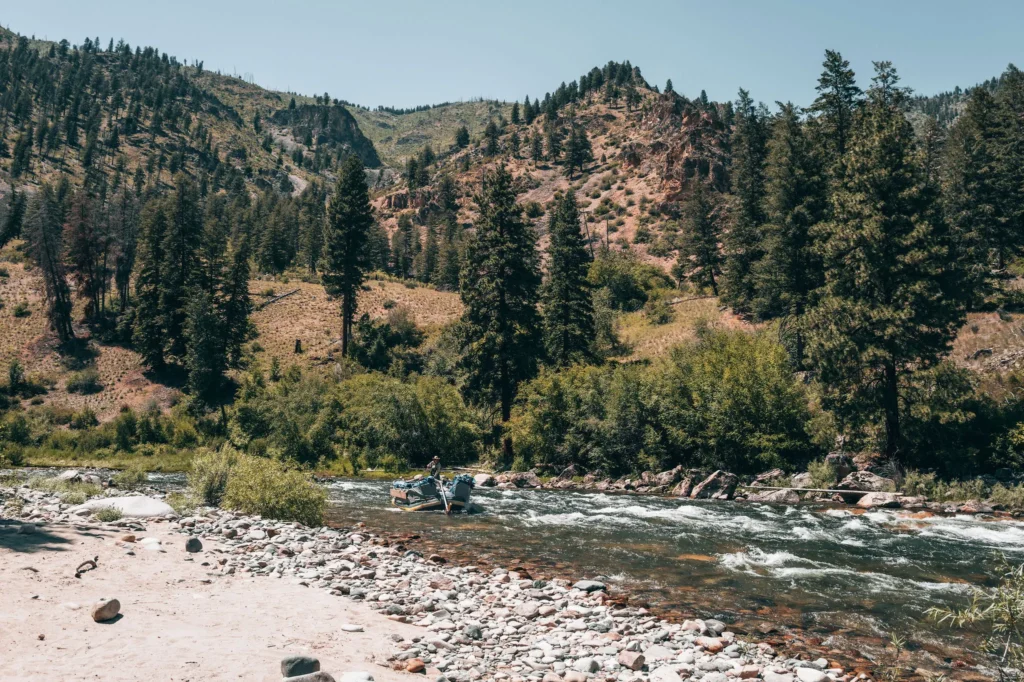
The Middle Fork of the Salmon feels wild because generations of river users have treated its camps, beaches, water, wildlife, and cultural places with care. On a guided trip, much of that work happens through systems the crew manages: assigned camps, portable toilets, fire equipment, food storage, waste handling, and daily camp routines. Guests still play an important part.
For Middle Fork Rapid Transit, sustainability on the river is not a claim that a trip has no impact. It means following the permit, using practical Leave No Trace habits, and making decisions that reduce avoidable damage in a heavily protected wilderness corridor.
This guide explains what those responsibilities look like on an MFRT trip, what the guides handle, and the simple choices that help every guest leave the river ready for the next group.
Middle Fork Stewardship at a Glance
| Part of the trip | What the crew manages | How guests help |
|---|---|---|
| Camps and landings | Assigned-camp logistics, boat landings, and a camp layout that uses practical durable areas | Follow the guide’s route, avoid vegetation, and keep personal gear contained |
| Toilets and trash | The group toilet, handwashing setup, garbage, food waste, ashes, and other pack-out systems | Use the designated systems and turn in every piece of trash, including micro-trash |
| Water and washing | Drinking water plus instructions for dishwashing and personal hygiene away from sensitive water | Keep soap out of the river, streams, lakes, and hot springs and use only the areas the guides identify |
| Campfires | Required fire and ash equipment when a fire is appropriate and allowed | Never burn trash or create a separate fire; follow current restrictions and guide instructions |
| Wildlife and food | Group food storage and a clean shared kitchen/camp system | Never feed wildlife and store snacks, toiletries, and other scented items where directed |
| Cultural and natural places | Site-specific guidance and decisions about whether a stop is appropriate | Look without touching, leave objects in place, and respect any viewing or photography limits |
The official Middle Fork permit page remains the best source for current river requirements. MFRT’s River 101 page carries the company’s current preparation guidance.
Why Leave No Trace Matters on the Middle Fork
The Middle Fork is not an ordinary campground connected by a road. The full 104-mile river was among the original eight waterways protected by the Wild and Scenic Rivers Act in 1968. With the exception of a one-mile scenic segment, the designated river is classified as wild and lies within the Frank Church–River of No Return Wilderness. The federal Middle Fork Wild and Scenic River profile identifies exceptional fish, wildlife, cultural, recreational, scenic, water-quality, and geologic values along the corridor.
That protection is paired with a year-round float permit. During busy periods, camps are assigned, and every boating group must carry specialized equipment and pack out its waste. The system allows people to experience the canyon while limiting the repeated damage that can accumulate when thousands of visitors use the same beaches, trails, hot springs, and camps.
Leave No Trace provides a useful framework for making those protections part of everyday behavior. The seven Leave No Trace principles are broad enough to apply in many outdoor settings; the sections below translate them into the decisions a guest encounters on a guided Middle Fork trip.
How the Seven Principles Work on a Guided River Trip
1. Plan Ahead and Prepare
Good stewardship begins before launch. The crew plans food, equipment, camps, boat loads, sanitation systems, and responses to changing conditions. Guests help that plan work by reading current trip materials, packing from the actual MFRT list, and providing complete medical and dietary information before the trip.
Bring durable items you can manage for the full trip rather than a collection of loose, disposable products. A secure refillable water bottle, well-fitting footwear, and containers that will not spill or blow away are more useful than improvised last-minute extras. Use the complete Middle Fork rafting packing list for personal gear instead of treating this stewardship guide as a second packing inventory.
Planning also means accepting that the river sets the itinerary. Water, weather, fire restrictions, access, assigned camps, and group needs may change where the trip stops or whether a campfire or side outing is appropriate.
2. Travel and Camp on Durable Surfaces
A river trip spends plenty of time on land. Boats pull into beaches, guests move between the kitchen and tents, and optional walks leave the river corridor. Repeated shortcuts can widen paths, loosen banks, and damage vegetation even when one set of footprints seems harmless.
Follow the landing and camp routes the guides establish. Place chairs and personal gear where directed, use existing paths, and avoid creating a new shortcut between camp areas. On hikes, stay with the guide and use the established route or durable ground. Our Middle Fork side-hikes and historic-sites guide explains how conditions and site protection shape optional outings.
Assigned camps do not mean unrestricted use of every part of a beach. They also do not guarantee complete privacy; the current permit notes that other Forest visitors may sometimes share a camp. A compact, thoughtful camp footprint protects more space for everyone.
3. Dispose of Waste Properly
The Middle Fork permit requires each group to carry and use a portable toilet, fire pan, fire blanket, ash container, shovel, bucket, and mesh strainer. Groups must carry out garbage, micro-trash, ashes, and solid human waste.
On an MFRT trip, the crew transports and manages the group systems. Guests do not need to bring a personal portable toilet or solve camp sanitation on their own. They do need to use the toilet and handwashing setup as instructed, keep litter under control, and tell a guide when something needs to be discarded.
Small items matter. Fruit stickers, torn snack wrappers, bottle caps, bits of foil, tissues, and corners of plastic packaging are easy to lose in sand or grass. Keep personal items zipped or weighted, do a final check before leaving lunch and camp, and pick up micro-trash even when it came from another visitor.
For the practical details of bathrooms, handwashing, and staying clean, use the dedicated Middle Fork camp-life guide.
4. Leave What You Find
The river corridor contains natural objects, archaeological evidence, pictographs, cabins, and places that remain culturally important. The permit requires archaeological artifacts and natural features to remain intact and undisturbed.
Do not pick up an artifact for a closer look, add to a rock stack, collect antlers or wildflowers, carve into a tree, or move objects around a historic structure. Context is part of the value: an item moved only a few feet can lose information that matters to land managers, archaeologists, or descendant communities.
At a sensitive stop, follow the guide’s instructions about distance, paths, group size, touching, and photography. A photograph is not automatically appropriate at every cultural place, and precise locations should not be shared when a site is intentionally protected.
5. Minimize Campfire Impacts
Fire rules on the Middle Fork are specific. When a campfire is permitted, it must be contained so charcoal and ash do not contact the ground, and the ash must be packed out. Current weather and fire restrictions can further limit or prohibit fires.
MFRT guides decide whether a fire fits the conditions and manage the group fire equipment, building, extinguishing, and ash handling. A campfire is never guaranteed. Guests can help by keeping personal items out of the work area, never burning trash, and following instructions about where to sit or dry gear.
Do not create a separate fire ring, gather or cut vegetation, or leave charcoal on a beach. A stove-lit evening without a campfire is the right choice whenever restrictions or conditions call for it.
6. Respect Wildlife
Wildlife should never learn that river camps provide food. Recreation.gov’s current Middle Fork notices ask boaters to maintain clean camps and secure food, human waste, and scented items because people share the corridor with bears.
Keep snacks, trash, toothpaste, lotions, and other scented products where the crew directs. Never feed an animal, leave food unattended, or move closer for a photograph. Watch quietly from a distance and make sure children understand that chasing, calling to, or throwing objects toward wildlife is not acceptable.
If an animal enters or approaches camp, give it space and follow the guides. Do not try to manage the encounter independently.
7. Be Considerate of Others
Several river parties may travel the corridor on the same day, and other visitors may be hiking, fishing, working at a guard station, or staying on private land. Solitude is protected partly through permit limits and partly through courtesy.
Keep music and late-night noise low, give another party room at a landing, and do not enter a camp or private property without direction. At a hot spring, trail, or viewpoint, share limited space and follow any current occupancy or site guidance. The Middle Fork hot-springs guide covers soaking-specific locations and etiquette.
Consideration also applies inside the group. Keep shared paths clear, return cups and camp items, respect toilet privacy, and listen when the crew needs everyone ready to move. A well-coordinated group uses less space and leaves fewer loose ends for the guides to correct.
What MFRT Guests Should Do
You do not need previous Leave No Trace training to join a trip. The most useful approach is to arrive prepared, pay attention to the site-specific briefing, and ask before acting when you are unsure.
Before the trip
- Read the current River 101 and pre-trip materials.
- Pack from the established list and avoid unnecessary disposable items.
- Bring a refillable bottle and secure containers for small personal items.
- Disclose dietary, medical, and medication needs early enough for the office to plan.
- Ask MFRT before bringing specialty food, bulky equipment, or anything that needs unusual storage.
The food and dietary-needs guide owns the detailed conversation about personal food, shared-kitchen limits, and advance dietary disclosure.
During the river day
- Keep straps, wrappers, and personal items secured in the boat or day bag.
- Follow guide directions at landings, lunch stops, trails, and hot springs.
- Give wildlife and other river parties space.
- Leave rocks, plants, historic material, and cultural features undisturbed.
- Tell a guide immediately if gear or trash enters the water.
In camp
- Use the established paths, toilet, handwashing, kitchen, and trash systems.
- Store food and scented products where directed.
- Keep soap and other pollutants out of natural water.
- Never burn trash or create a fire outside the crew’s system.
- Check the area around your tent and chair before departure.
These actions are deliberately simple. The crew handles the technical group equipment and logistics; the guest’s role is to use those systems consistently.
Middle Fork Leave No Trace FAQ
No. Read the pre-trip information and come ready to follow guide instructions. The crew will explain the specific camp, toilet, washing, fire, wildlife, and site-protection practices you need during the trip.
No. The Middle Fork permit states that soap—including biodegradable soap—must not be used in streams, the river, lakes, or hot springs. Follow the guides’ instructions for washing and personal hygiene away from natural water.
The group must carry out solid human waste in an approved portable system. MFRT transports, sets up, and manages the camp toilet; guests use it according to the crew’s instructions. The [camp-life guide](https://middleforkrapidtransit.com/camp-life-middle-fork-bathrooms-hygiene/) explains what the setup feels like in practice.
No. A fire is possible only when current restrictions, weather, fuel availability, and the trip plan allow it. When there is a fire, the crew contains it in the required system and packs out the ash.
No. Recreation.gov states that drones are not allowed in Wilderness Areas. Leave the drone at home rather than carrying equipment that cannot legally be used during the wilderness portion of the trip.
No. Leave natural and archaeological objects where you find them. Do not move an item for a photograph or closer inspection; point it out to a guide and preserve its context.
Help Keep the Middle Fork Wild
The best river stewardship is quiet and repeatable: use the systems provided, keep track of your belongings, give wildlife and other visitors room, and leave each stop intact. Those habits let a comfortable guided trip coexist with the protections that make the Middle Fork extraordinary.
If you have questions about camp routines, personal gear, dietary planning, or a specific accommodation, contact Middle Fork Rapid Transit before your trip. The team can explain what MFRT manages and what you should prepare personally.