


Estimated reading time: 12 minutes
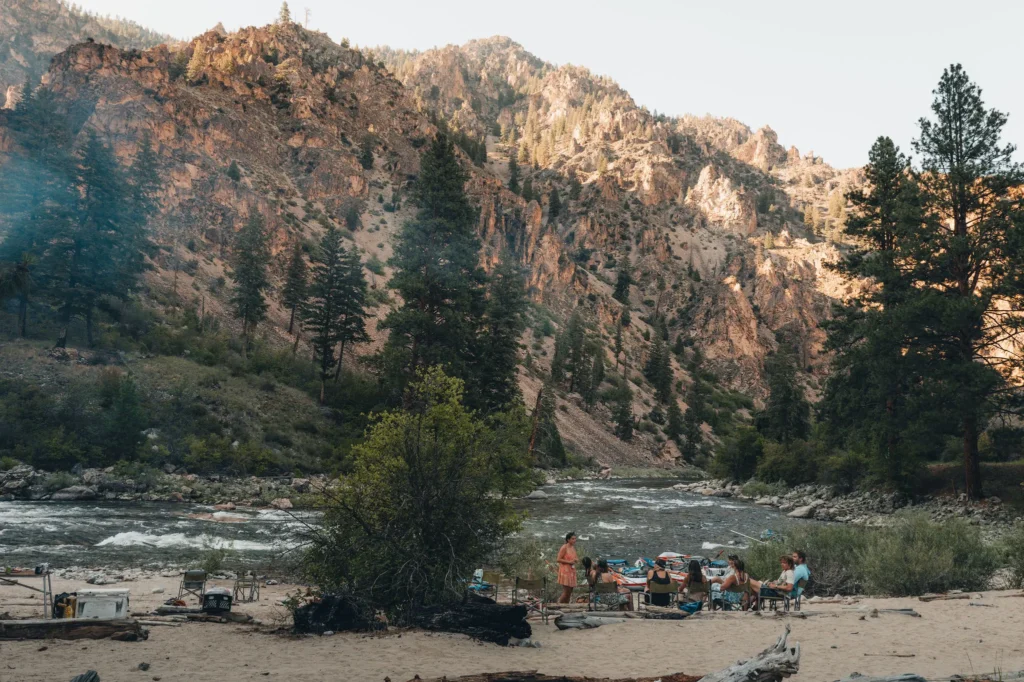
A typical Middle Fork rafting day has a dependable rhythm without feeling ruled by a clock. You wake in a riverside camp, eat a hot breakfast, pack your personal gear, spend the day moving through whitewater and quiet canyon reaches, stop for lunch and possible side adventures, then settle into a new camp for appetizers, dinner, and an unhurried evening.
The important word is typical. Water level, mileage to the assigned camp, weather, group needs, and available stops all influence the day. This sample describes a full camp-to-camp day in the middle of a standard trip—not launch morning or take-out day—and uses times as planning anchors rather than promises.
For a quick visual version of the rhythm, preview MFRT’s A Day on the River experience page. The guide below adds the practical details: what you do at each transition, which gear stays available, and where flexibility enters the schedule.
Sample Middle Fork Rafting Schedule at a Glance
| Approximate time | Typical part of the day |
|---|---|
| Early morning | Wake up, dress for the weather, and have coffee or another hot drink |
| Around 8:00 a.m. | Hot breakfast and an overview of the day’s river plan |
| After breakfast | Pack your personal overnight gear; organize the items you want in your day bag |
| Around 10:00 a.m. | Put on your PFD, choose a boat, and launch |
| Midday | Pull over for a riverside lunch and a break |
| Early to mid-afternoon | Return to the river, with possible hikes, hot springs, fishing, or other stops |
| Late afternoon | Reach the night’s camp and retrieve your overnight gear |
| Around 5:30 p.m. | Appetizers and free time |
| Around 7:00 p.m. | Dinner and dessert |
| After dinner | Campfire, conversation, reading, stargazing, or an early night |
MFRT’s current Trip Details describe about four to six hours on the water on a usual day, divided by lunch and other stops. That is boating time, not four to six uninterrupted hours in one seat.
Morning in Camp: Wake, Eat, and Set Up the Day
Morning begins with the river already in earshot. You do not need to break down a kitchen or solve the day’s route; the guide crew handles the shared systems and river plan. Your job is to get dressed, eat, and make sure the right personal items are in the right bag before the boats leave.
Breakfast is generally served around 8:00 a.m. A guide may also explain the broad plan for the day: anticipated mileage, significant rapids, weather considerations, and possible stops. The plan can still change as the crew evaluates conditions.
Dress for the next few hours, not the whole day
The large dry bag that holds your sleeping gear and most clothing is packed with the overnight equipment. Once loaded, it may not be practical to reach until camp. Before handing it off, look at what you are wearing and ask whether you would be comfortable if the morning became cooler, wetter, sunnier, or windier than expected.
MFRT also provides a smaller 15-liter day-use dry bag. Use it for the few items you may want before camp, such as:
- Sunscreen and lip protection
- Sunglasses with a secure strap
- A warm layer or rain shell
- Personal medication needed during the day
- A camera or other small personal item in suitable protection
- A hat and any approved snack or comfort item
This is not the complete packing list. Use the Middle Fork rafting packing guide and your current MFRT materials for that. The useful morning question is simply: What might I need before my large bag comes off the gear load this afternoon?
Pack personal gear while the crew breaks camp
After breakfast, return sleeping and personal items to the large dry bag and close it as instructed. Keep the landing area orderly, refill your water bottle, apply sunscreen, and be ready when the guides call for PFDs and boat assignments.
MFRT handles the major camp systems, but a smooth departure still depends on guests keeping track of personal belongings and responding to the crew’s timing. A missing shoe or open bag can delay an entire group.
Morning on the Water: Choose a Ride and Find the Rhythm
MFRT travels with different self-bailing boats, and most guests can rotate during the trip when conditions and logistics allow. An oar boat offers a less active ride while the guide rows. A paddle boat lets guests work as a crew under guide commands. Inflatable kayaks provide a more independent option when the guide team determines they are appropriate.
You do not need to choose one boat for the entire week. Tell a guide what kind of morning you want—relaxed, social, active, or more independent—and follow their recommendation for that section of river. Our family rafting and boat-choice guide explains the options in more depth.
Before pushing away from shore, expect a PFD check and any instructions needed for the boat you are using. Guides may review paddle commands, explain a significant rapid, or ask inflatable-kayak paddlers to regroup before a technical section. These short pauses are part of the day, not delays in it.
The river alternates between action and attention
One stretch may bring a run of splashy rapids; the next may slow enough for conversation, wildlife watching, or a story about the canyon. You might stay in one boat until lunch or change at a suitable landing. Boat changes are opportunities, not guaranteed at every stop.
The Middle Fork’s permit protects a 104-mile wilderness river with assigned camps and low-impact requirements. The current Recreation.gov permit page notes that groups must use their assigned camps and carry out garbage, ashes, and human waste. Those constraints help explain why a commercial trip moves with purpose even when the guest experience feels relaxed: the crew is always balancing river miles, safe landings, camp timing, and stewardship.
Midday: Riverside Lunch and a Reset
Around midday, the group pulls into a suitable beach or bench for lunch. Guides unload what they need and set out the meal while guests stretch, find shade, or take in the view. Depending on the site and conditions, there may be time for a quick swim, a short walk, fishing, or simply doing nothing.
Lunch is also a useful reset point:
- Refill or check your water bottle.
- Reapply sunscreen and adjust layers.
- Retrieve anything needed from the day bag.
- Ask about the afternoon boat plan.
- Secure every personal item before launch.
The stop may feel leisurely, but it is not an unlimited layover. The crew still has river miles to cover and an assigned camp to reach. Listen for the guide’s departure cue before spreading gear across the beach or beginning an activity that takes you away from the group.
For a closer look at how food fits into the trip, visit MFRT’s Feast page. This itinerary intentionally leaves the menu details there.
Afternoon: More River, with Stops When the Day Allows
After lunch, you return to the boats for another river session. The afternoon may combine rapids and quiet water with one or more optional experiences:
- A natural hot spring
- A short hike or historic-site visit
- A waterfall or viewpoint
- Fishing from an appropriate boat or shore stop
- Swimming or a rock-jump location selected by the guides
No particular stop belongs to every itinerary. River level can affect landings, heat can change the wisdom of a hike, and the distance to camp may make one option practical while another is not. Archaeological sites and natural features also require careful visitation. Use the Middle Fork side-hikes and historic-sites guide and hot-springs guide to understand those experiences without treating either as a checklist.
If one activity matters most to you, mention it early. Guides cannot promise a particular stop, but knowing whether you are hoping to fish, hike, soak, or spend time in an inflatable kayak helps them recognize suitable opportunities within the day’s real constraints.
Late Afternoon: Arrive at Camp and Change Gears
Camp usually comes into view in the late afternoon. The landing itself is an active transition, so wait for instructions before standing, unloading, or walking away. The crew needs to secure boats, account for people and equipment, and organize what comes ashore.
MFRT carries the tents, sleeping systems, kitchen, chairs, sanitation equipment, and other shared gear. Depending on the day’s boat and crew logistics, parts of camp may already be taking shape or the guides may begin the setup after arrival. Either way, the large dry bag becomes available again and the day shifts from river mode to camp mode.
Choose a tent area as directed, move personal gear off the main paths, and change into dry camp clothes. Then the late afternoon is generally yours. You might read, fish, walk, play a beach game, talk with other guests, or sit where you can watch the kitchen come to life.
For details about tents, sleeping systems, toilets, handwashing, and personal hygiene, use the dedicated Middle Fork camp-life guide. This article owns the sequence of the day, not the full explanation of camp systems.
Evening: Appetizers, Dinner, and Time That Is Actually Free
MFRT’s Trip Details use about 5:30 p.m. for appetizers and about 7:00 p.m. for dinner. Those are useful expectations, but arrival time and setup can move the evening slightly.
Appetizer time is the first long exhale of the day. You are no longer deciding what to wear in the boat or listening for a launch call. There is room to talk, journal, take photographs, or find a quiet edge of camp.
After dinner and dessert, the evening has no required program. Some groups gather around a permitted campfire when conditions allow. Others talk, play music, watch the canyon darken, or turn in early. Fires are never guaranteed; restrictions, fuel availability, weather, and the crew’s low-impact plan determine whether one is appropriate.
Before bed, set out what you will need first in the morning: dry camp shoes, a warm layer, headlamp, and any medication. A few minutes of organization at night makes it easier to enjoy the next wake-up instead of searching through a full dry bag.
Why the Clock Changes from Day to Day
The sample schedule is intentionally approximate because several real variables shape each day.
| Variable | How it can change the rhythm |
|---|---|
| Water level and current speed | Changes travel time, rapid character, landing options, and boat choices |
| Assigned camp and daily mileage | Determines how far the group must travel before the evening setup |
| Weather | Can prompt earlier layer changes, shorter stops, or a different activity plan |
| Side-stop conditions | A hike, hot spring, or historic site may be skipped, shortened, or substituted |
| Group needs | Rest, medical considerations, children, or activity preferences can affect transitions |
| River operations | Boat scouting, safety briefings, equipment needs, and other groups can change timing |
Water is one of the strongest variables. Our Middle Fork flows guide explains how broad flow bands change travel and rapid feel without pretending a gauge reading can predict the exact day’s clock.
The best mindset is to learn the order of the day, not memorize every time. Breakfast comes before personal bags are loaded. The day bag stays with you. Lunch divides the river sessions. Camp brings access to overnight gear. Appetizers and dinner anchor the evening. Guides handle the moving parts between those points.
How Launch Day and Take-Out Day Differ
The sample above fits the middle days of a trip. The first and last days have different logistics.
The evening before and launch morning
Current MFRT River 101 logistics call for a 6:30 p.m. orientation in Stanley the evening before launch. That is when the group meets the lead guide, reviews the next morning, and receives key trip items. The scheduled pickup is 8:00 a.m. on launch morning.
From there, guests travel toward Boundary Creek or, when conditions dictate, the Stanley airport for a flight to Indian Creek. Breakfast on launch day is on your own; eat before pickup. The crew then completes rigging and a comprehensive safety orientation at the put-in before the first river miles.
The Boundary Creek versus Indian Creek guide owns the detailed put-in comparison, and the Stanley travel guide owns pre-trip transportation planning.
Take-out day
On the final day, breakfast and departure happen earlier. The group runs the remaining river miles to Cache Bar, where boats and gear are loaded for the return trip. MFRT’s current logistics estimate arrival back in Stanley around 5:00 p.m., give or take about an hour. Treat that as an estimate when planning a same-day connection; wilderness trips can shift.
Four Ways to Make Every Transition Easier
- Keep the day bag selective. If everything feels essential, the items you truly need become harder to find.
- Respond early to guide cues. Put on the PFD, close the dry bag, or return to the boat before the final call.
- Communicate one meaningful preference. Tell the crew if you hope to try a different boat, fish, hike, or have a quieter afternoon.
- Expect sequence, not precision. The day has a reliable shape even when lunch or camp arrives earlier or later than the sample.
That balance is the point of the trip. The crew maintains the operational schedule; you get enough structure to feel cared for and enough open time to experience the river.
Middle Fork Rafting Day FAQ
MFRT’s Trip Details estimate about four to six hours on the water on a typical day. Lunch, side stops, safety pauses, and other breaks divide that time, so it is not one uninterrupted sitting period.
There is no guaranteed wake-up time. Breakfast is generally around 8:00 a.m. on a normal camp-to-camp day, so guests wake with enough time to dress and get organized beforehand. Take-out day usually begins earlier.
Often, yes. MFRT notes that most guests rotate among boats during a trip. Actual changes depend on water conditions, boat availability, the next rapids, and safe landing opportunities, so follow the guide team’s plan.
Keep daytime essentials in the smaller day-use dry bag. The larger overnight dry bag is normally loaded with camp gear and may not be accessible until the group reaches the next camp.
No. Stops depend on the assigned camp, river level, weather, timing, landing conditions, and group needs. Treat hikes, hot springs, fishing, and other side activities as possibilities rather than a daily checklist.
MFRT provides and manages the major camp systems, including tents, sleeping gear, kitchen equipment, chairs, and sanitation equipment. Guests are responsible for keeping personal gear organized and following crew instructions at landings; ask the trip leader if you would like to help with an appropriate task.
See the Rhythm, Then Plan Your Trip
Use MFRT’s visual sample itinerary for a quick preview, then review River 101 for current logistics and trip materials. When you are ready to choose a departure, explore rates and dates or contact the MFRT team with questions about how the daily rhythm may fit your group.